讲座题目 | Calibrating GenAI for Simulation and Inference in Business Research | ||
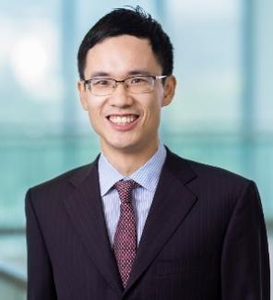
主讲人 (单位) | 张任宇 (香港中文大学) | 主持人 (单位) | 李四杰、金子亮 (东南大学) |
讲座时间 | 2026年9月17日10点00分 | 讲座地点 | 综合楼310 |
主讲人简介 |
张任宇,香港中文大学商学院教授,人工智能研创中心联合主任,主要研究AI与数据科学赋能商业决策,开发大语言模型、机器学习、因果推断和数据驱动优化评估并优化大规模在线平台运营策略。研究成果持续在Management Science, Operations Research, Manufacturing & Service Operations Management等顶刊发表并获得INFORMS, POM, CSAMSE等多个学术共同体研究奖励。研究项目获得HK RGC Research Fellow Scheme,NSFC(青B),腾讯,阿里和滴滴资助。担任学术期刊Operations Research, Manufacturing & Service Operations Management的Associate Editor和Production and Operations Management的Senior Editor。详见个人网站://rphilipzhang.github.io/rphilipzhang/ | ||
讲座内容摘要 | Large language models offer business researchers two forms of leverage: synthetic decision-makers for social simulations, and predictive labels for large-scale empirical analysis. Yet AI outputs are systematically biased, rarely meeting rigorous statistical or theoretical standards. Calibration, I argue, turns abundant-but-imperfect AI into trustworthy research artifacts, illustrated at two stages of the empirical pipeline. For pre-hoc simulation, we translate behavioral theory into structured LLM prompts, calibrate them against limited human data, and validate alignment at outcome and reasoning levels. Calibrated agents reproduce the behavioral hypotheses in several settings and generalize out-of-sample. For post-hoc inference, calibrated LLM-augmented double machine learning (Aug-DML) fuses sparse experimental labels with abundant LLM pseudo-labels, reducing causal estimation MAPE by up to 32% over standard DML at 1% labeled data while preserving nominal 95% coverage. Together, they trace a promising agenda: AI serves business research best not as a replacement for theory or experiments, but as a calibrated complement at well-chosen points in the empirical pipeline. | ||