讲座题目 | Optimizing Service Operations via LLM-Powered Multi-Agent Simulation | ||
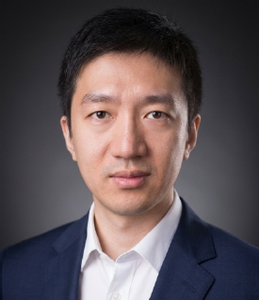
主讲人 (单位) | 张晓炜 (香港科技大学) | 主持人 (单位) | 李四杰 (东南大学) |
讲座时间 | 2026年4月8日下午3:00 | 讲座地点 | 经管楼A401 |
主讲人简介 |
Xiaowei Zhang is an Associate Professor at HKUST, jointly appointed in the Department of Industrial Engineering and Decision Analytics and the Department of Economics, and the Academic Director of the MSc in FinTech program. He earned his Ph.D. in Management Science and Engineering and M.S. in Financial Mathematics, both from Stanford University, and his B.S. in Mathematics from Nankai University. His research interests focus on methodological advances in AI simulation, stochastic optimization, and reinforcement learning, with applications in service operations management, digital economy, and financial technology. He serve as an Associate Editor for several leading journals in the field, including Management Science, Operations Research, Navel Research Logistics, and Queueing Systems. | ||
讲座内容摘要 | Service system performance depends on how participants respond to design choices, but modeling these responses is hard due to the complexity of human behavior. We introduce an LLM‑powered multi‑agent simulation (LLM‑MAS) framework for optimizing service operations. We pose the problem as stochastic optimization with decision‑dependent uncertainty: design choices are embedded in prompts and shape the distribution of outcomes from interacting LLM-powered agents. By embedding key numerical information in prompts and extracting it from LLM‑generated text, we model this uncertainty as a controlled Markov chain. We develop an on‑trajectory learning algorithm that, on a single simulation run, simultaneously constructs zeroth-order gradient estimates and updates design parameters to optimize steady-state performance. We also incorporate variance reduction techniques. In a sustainable supply chain application, our method outperforms benchmarks, including blackbox optimization and using LLMs as numerical solvers or as role‑playing system designers. A case study on optimal contest design with real behavioral data shows that LLM‑MAS is both as a cost‑effective evaluator of known designs and an exploratory tool that can uncover strong designs overlooked by traditional approaches. | ||